
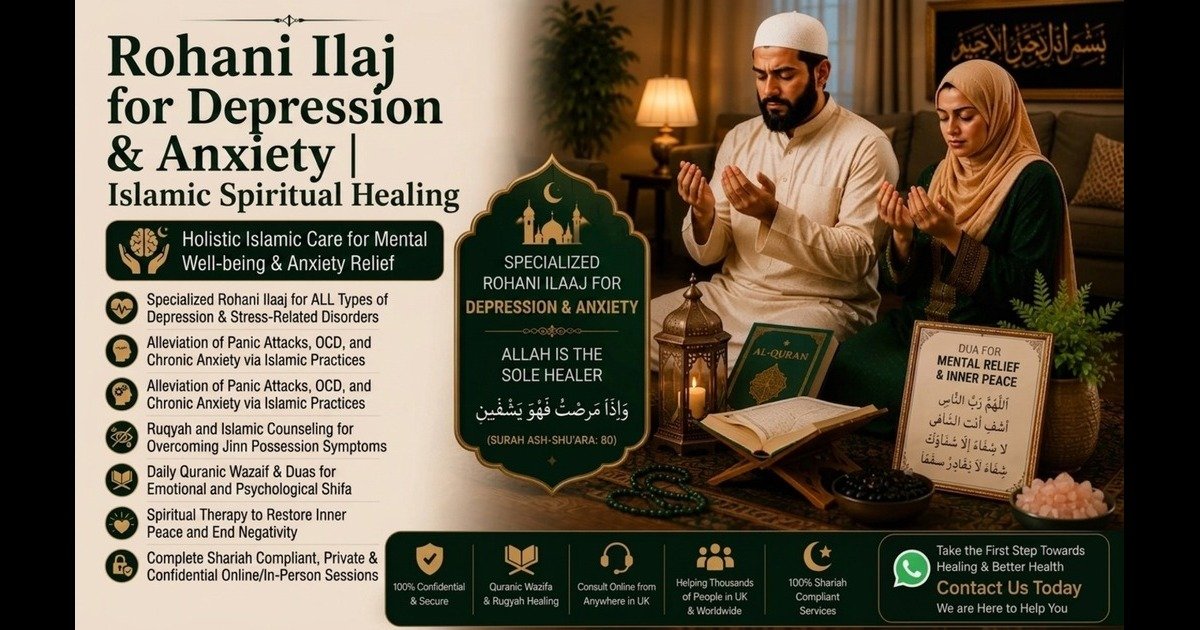
Rohani Ilaaj for Depression and Anxiety: Islamic Healing Explained
Depression and anxiety have become increasingly common struggles in today’s world, affecting people of all ages, backgrounds, and walks of life. For many Muslims, however, standard medical treatment alone often feels incomplete leaving a deeper spiritual restlessness unaddressed. This is where Rohani Ilaaj for depression and anxiety comes in: a faith-based approach to healing that treats not just the mind, but the soul.
In this guide, we’ll explore what Rohani Ilaaj actually is, how it addresses depression and anxiety from an Islamic spiritual perspective, and how it can work alongside not instead of professional support.
What Is Rohani Ilaaj?
Rohani Ilaaj translates to “spiritual treatment” or “spiritual healing.” It’s a practice rooted in Quranic recitation, prophetic duas, and spiritual guidance aimed at treating ailments that may have a spiritual root cause whether that’s the effects of black magic (sihr), the influence of jinn, evil eye (nazar), or simply a spiritual emptiness that manifests as persistent sadness, fear, or unease.
Unlike purely medical treatment, Rohani Ilaaj approaches mental and emotional struggles holistically recognizing that human beings are made up of body, mind, and soul, and that true healing often requires addressing all three.
Understanding Depression and Anxiety Through an Islamic Lens
Islam has never denied the reality of sadness, grief, or fear. Many prophets, including Prophet Yaqub (peace be upon him), experienced deep grief. What Islam offers, however, is a framework for understanding and coping with these emotions through faith, patience (sabr), remembrance of Allah (dhikr), and spiritual treatment when needed.
There are generally considered to be a few overlapping causes behind persistent depression and anxiety from an Islamic spiritual perspective:
1. Natural Human Emotion
Sometimes sadness or worry is simply a natural human response to life’s difficulties loss, stress, disappointment, or major life changes. This doesn’t necessarily indicate a spiritual problem, but rather a normal part of the human experience that Islam encourages us to face with patience and dua.
2. Spiritual Emptiness or Distance from Faith
A weakened connection to prayer, Quran, and dhikr can sometimes manifest as a persistent sense of heaviness, restlessness, or hopelessness even when life circumstances seem outwardly fine.
3. Spiritual Interference (Sihr, Jinn, or Nazar)
In some cases, ongoing depression or anxiety that doesn’t respond to typical coping methods, that comes with unusual symptoms (sudden mood swings, unexplained fear, disturbed sleep, recurring nightmares), may be linked to spiritual interference. This is where Rohani Ilaaj becomes particularly relevant.
Common Symptoms That May Indicate a Spiritual Root Cause
While every case is different, certain patterns are commonly reported by people whose depression or anxiety may have an underlying spiritual component:
- Sudden, unexplained sadness or hopelessness with no clear life trigger
- Persistent nightmares or disturbed sleep, especially involving fear or darkness
- Feeling a heavy, unexplained weight on the chest, especially at night
- Sudden aversion to prayer, Quran recitation, or the mosque, despite previously feeling connected to faith
- Unexplained mood swings, irritability, or emotional numbness
- A general sense of “heaviness” or spiritual disconnection that doesn’t improve with rest, medication, or lifestyle changes
If several of these symptoms sound familiar and have persisted for a long time despite trying various coping methods, it may be worth exploring whether Rohani Ilaaj could offer additional relief.
How Rohani Ilaaj Addresses Depression and Anxiety
Rohani Ilaaj typically combines several elements, tailored to the individual’s specific situation:
Quranic Recitation and Ruqyah
Ruqyah the recitation of specific Quranic verses and prophetic duas is one of the core tools used in Rohani Ilaaj. Certain surahs and verses are known for their calming, protective, and healing properties, and are recited over the affected person, sometimes combined with reciting over water that is then consumed.
Prescribed Duas and Wazaif
Specific duas taught by the Prophet Muhammad (peace be upon him) for anxiety, grief, and distress are often prescribed as part of a daily spiritual routine. These duas are meant to be recited consistently, often alongside dhikr, to gradually restore emotional and spiritual balance.
Identifying and Removing Spiritual Blockages
If an underlying spiritual cause (such as sihr or jinn influence) is identified, a Rohani Ilaaj practitioner will guide the person through a specific process to remove this interference often involving a combination of ruqyah, protective duas, and lifestyle guidance.
Strengthening the Spiritual Connection
Beyond addressing any specific blockage, Rohani Ilaaj also emphasizes rebuilding a consistent connection with Allah through regular prayer, dhikr, and Quran recitation since a weakened spiritual state can itself contribute to prolonged emotional struggles.
Rohani Ilaaj Alongside Medical Treatment
It’s important to be clear: Rohani Ilaaj is not intended to replace professional medical or psychological treatment. Depression and anxiety are recognized medical conditions, and many cases genuinely require therapy, counseling, or medication alongside spiritual support.
The most effective approach for many people is a combined one continuing any prescribed medical treatment while also incorporating spiritual healing to address the deeper faith-based dimension of their struggle. If you are currently on medication or working with a therapist, it’s important to continue that treatment while exploring Rohani Ilaaj as a complementary form of support, not a replacement.
Daily Practices to Support Emotional and Spiritual Wellbeing
Alongside formal Rohani Ilaaj sessions, incorporating the following daily practices can help support long-term emotional stability:
- Consistent five daily prayers, performed with focus and presence rather than rushed habit
- Regular dhikr, especially “SubhanAllah,” “Alhamdulillah,” and “La ilaha illallah,” which are known to bring calmness to the heart
- Daily Quran recitation, even a small portion, to maintain spiritual connection
- Reciting Ayat-ul-Kursi before sleeping for protection and peace of mind
- Maintaining wudu throughout the day where possible, as it’s believed to help maintain spiritual clarity
- Avoiding isolation spending time with family and community, since prolonged isolation often worsens both depression and spiritual vulnerability
When to Seek Professional Rohani Ilaaj Guidance
If you’ve tried the above practices consistently and still feel persistently low, anxious, or spiritually disconnected especially if accompanied by unusual symptoms like disturbing nightmares, sudden aversion to worship, or a heaviness that doesn’t lift it may be time to consult an experienced Rohani Ilaaj practitioner.
A knowledgeable practitioner can properly assess your specific situation, distinguish between ordinary emotional struggles and potential spiritual interference, and guide you through an appropriate, personalized treatment plan rooted in authentic Islamic practice.
At Roohani Elaj UK, we’ve supported many clients across the UK dealing with persistent depression and anxiety, helping them find both spiritual clarity and practical relief through a combination of ruqyah, prescribed duas, and ongoing spiritual guidance.
Final Thoughts
Depression and anxiety are heavy burdens to carry, but Islam offers a path toward healing that addresses far more than just symptoms it speaks to the soul itself. Rohani Ilaaj for depression and anxiety isn’t a magic fix, but a sincere, faith-rooted approach that, combined with appropriate medical care when needed, can help restore genuine peace and emotional balance.
If you’re struggling and unsure where to turn, know that support exists that honors both your emotional wellbeing and your faith. Reaching out for guidance is not a sign of weak faith it’s a sign of wisdom and self-care.
6. FAQ Section
Q1: Can Rohani Ilaaj cure clinical depression completely on its own? Rohani Ilaaj is best used as a complementary spiritual approach alongside professional medical treatment, not as a replacement for therapy or medication when clinically needed. Many people find the greatest relief through a combined approach.
Q2: How do I know if my depression has a spiritual cause or is purely medical? Unusual symptoms like disturbing nightmares, sudden aversion to prayer, or unexplained mood swings without a clear life trigger may suggest a spiritual component. A qualified Rohani Ilaaj practitioner can help assess your specific situation.
Q3: Is it normal for a believing Muslim to experience depression or anxiety? Yes, completely. Even prophets experienced deep grief and sorrow. Depression and anxiety don’t indicate weak faith Islam provides tools like sabr, dua, and dhikr to help navigate these emotions.
Q4: How long does Rohani Ilaaj treatment typically take to show results? This varies significantly depending on the individual and underlying cause. Some people notice gradual relief within a few weeks of consistent practice, while others with deeper spiritual blockages may require a longer treatment period.
Q5: Can I perform Rohani Ilaaj practices at home, or do I need a practitioner? Basic practices like dhikr, dua, and daily Quran recitation can absolutely be done at home. However, if you suspect a deeper spiritual cause such as sihr or jinn influence, consulting an experienced practitioner is recommended for proper guidance.