
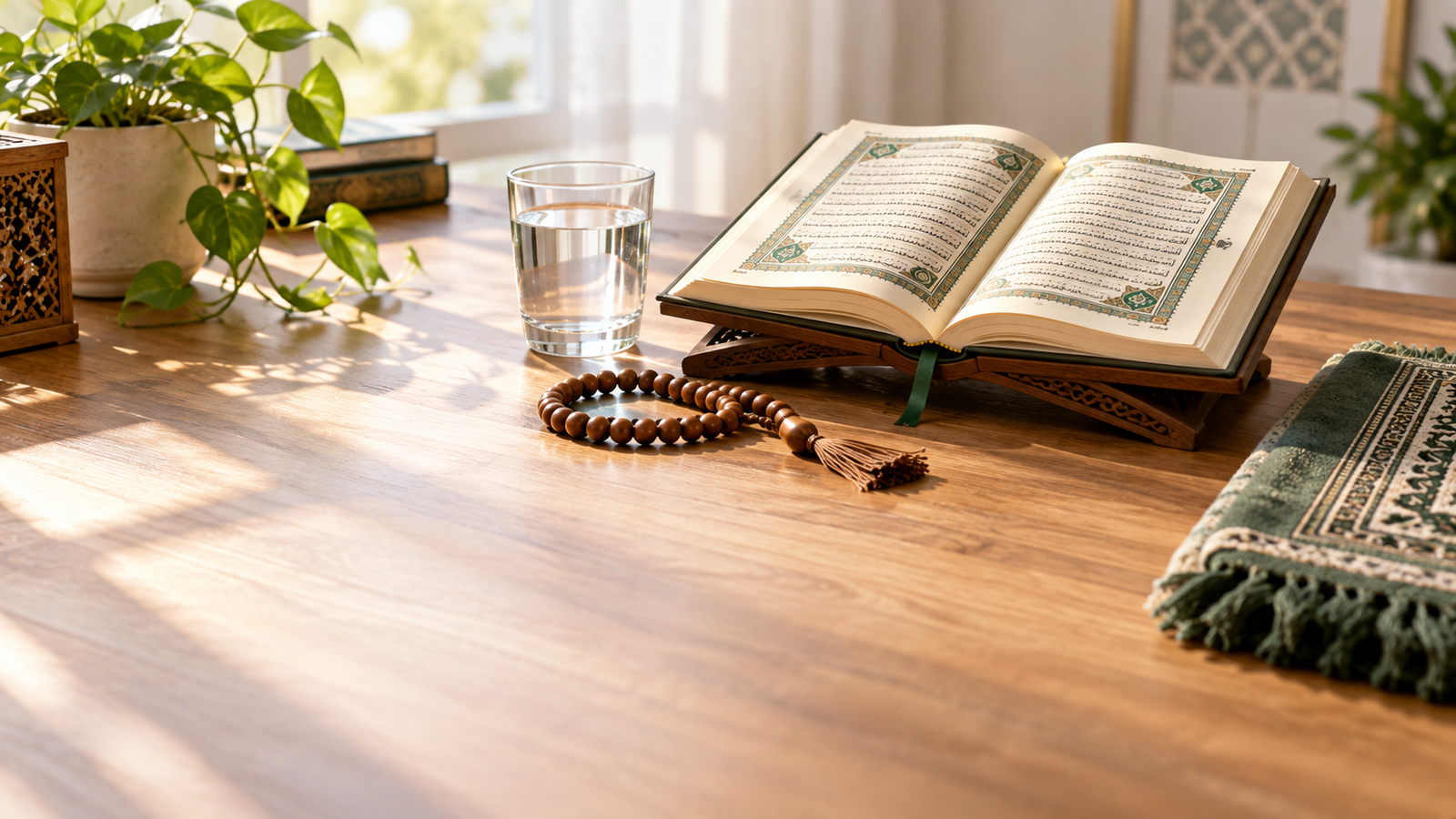
One of the most empowering things about ruqyah at home UK is that it genuinely doesn’t require a practitioner, a fee, or anyone’s permission — it’s something every Muslim can learn and perform for themselves, using nothing but the Quran, sincerity, and a few minutes of your day. This guide walks through the authentic, Sunnah-based method step by step.
What Ruqyah Is (and Isn’t)
Ruqyah shar’iyyah is the recitation of Quranic verses and authentic Prophetic duas for protection, healing, and spiritual wellbeing — for general daily protection, and specifically for suspected harm from sihr, nazar (evil eye), or waswas (intrusive whispers). It is not a ritual involving unknown words, objects, symbols, or anyone else’s permission — it’s simply reciting the Quran with presence and intention.
Before You Start
- Perform wudu if possible — not strictly required, but recommended
- Find a quiet space where you can focus without interruption
- Set a sincere intention — seeking Allah’s healing and protection, not performing a ritual mechanically
- Have water nearby if you plan to also prepare ruqyah water (explained below)
Step-by-Step Self-Ruqyah Method
Step 1: Begin with Ta’awwudh and Basmalah
Say A’udhu billahi minash-shaytanir-rajim (I seek refuge in Allah from the accursed Shaytan) and Bismillah (In the name of Allah) before you begin reciting.
Step 2: Recite Surah Al-Fatiha
The opening chapter of the Quran, known among its many names as ash-Shifa (the healing), is a core part of ruqyah.
Step 3: Recite Ayat al-Kursi
Surah Al-Baqarah, 2:255 — one of the most emphasised verses for protection in authentic hadith, recommended especially before sleep and as a regular daily practice.
Step 4: Recite the Last Three Verses of Surah Al-Baqarah
Verses 284–286, which the Prophet ﷺ specifically encouraged reciting at night for protection.
Step 5: Recite Surah Al-Falaq and Surah An-Nas
The final two chapters of the Quran, revealed specifically regarding protection from evil, envy, and harm — recite each three times, following the Sunnah pattern the Prophet ﷺ used, particularly morning and evening.
Step 6: Recite the Prophetic Dua for Protection
“A’udhu bikalimatillahit-tammati min sharri ma khalaq” — “I seek refuge in the perfect words of Allah from the evil of what He has created” — recommended to recite, especially before sleep or when in an unfamiliar or unsettling place.
Step 7: Blow Gently on Yourself (Nafth)
Following the Sunnah, gently blow (a light exhale, not spitting) onto your hands after reciting, then wipe them over your body — the Prophet ﷺ practised this himself, particularly before sleep, reciting Al-Ikhlas, Al-Falaq, and An-Nas into his cupped hands before wiping them over his body.
Step 8: Repeat Consistently
Ruqyah is most effective as a regular practice — ideally daily, particularly morning and evening — rather than a one-off session when something feels wrong.
How to Prepare Ruqyah Water
A recognised practice in Islamic tradition: recite the verses above (Al-Fatiha, Ayat al-Kursi, Al-Falaq, An-Nas, and other protective verses) over a container of water with sincere intention, then drink it and, if you wish, use a small amount to wash your face and hands. This isn’t about the water itself having power — the benefit is understood to come from Allah, with the water simply as a means, following the general pattern of ruqyah using water found in authentic narrations.
What Ayat (Verses) to Read for Ruqyah — Quick Reference
- Surah Al-Fatiha (1:1–7)
- Ayat al-Kursi (2:255)
- Al-Baqarah 2:1–5 and 2:284–286
- Surah Al-Ikhlas (112)
- Surah Al-Falaq (113)
- Surah An-Nas (114)
- Surah Yunus 10:81–82 (regarding sihr specifically)
- Surah Al-A’raf 7:117–122 and Surah Ta-Ha 20:69 (regarding Musa/Pharaoh’s magicians — commonly included in ruqyah for suspected sihr)
How Long Does Ruqyah Take to Work?
There’s no fixed timeframe, and this varies significantly by person and situation. Some people feel immediate ease; for others, especially where something more serious is genuinely involved, consistent daily practice over weeks matters more than any single session. Ruqyah is best understood as an ongoing spiritual practice and protective habit, not a one-time treatment with a guaranteed timeline — and expecting an instant, dramatic result can lead to unnecessary worry if it doesn’t happen immediately.
Self-Ruqyah for Suspected Black Magic (Sihr)
The method above applies the same way whether you’re practising general daily protection or specifically addressing suspected sihr. A few additional notes specific to this:
- Recite with particular attention and unhurried focus, rather than rushing through
- Surah Yunus 10:81–82 is commonly emphasised in this specific context, alongside the core verses above
- If you experience an unusually strong reaction while reciting (which some people report, though this varies enormously and isn’t universal or required), continue calmly rather than panicking — and note that a strong reaction to hearing the Quran is not, by itself, reliable evidence of sihr, since sincerity and unfamiliarity with regular recitation can also produce a strong emotional response
- If concern is genuinely severe or persistent despite consistent practice, a knowledgeable local imam is the right next step — not escalating to unknown or unfamiliar rituals
When Self-Ruqyah Isn’t Enough
Self-ruqyah is the foundation, but it’s reasonable to also seek a trustworthy local imam if:
- Concern is severe, persistent, or significantly affecting your daily life despite consistent practice
- You’d value guidance or company while reciting
- The situation involves something beyond your own comfort to address alone
If severe physical or psychological symptoms are involved, please also see a doctor — spiritual practice works alongside medical care, not instead of it.
Finding Support in the UK
- Self ruqyah London Muslim: several London mosques run free workshops teaching self-ruqyah, useful if you’d like guided practice before doing it independently.
- Islamic self-healing Birmingham: Birmingham Islamic centres increasingly offer short courses specifically on ruqyah, taught by scholars trained in this area.
- Free resources: numerous reputable UK Islamic organisations publish free audio recordings of ruqyah verses with correct tajweed (pronunciation), useful for following along as you learn.
Frequently Asked Questions
How do I perform ruqyah on myself? Recite Al-Fatiha, Ayat al-Kursi, the last three verses of Al-Baqarah, and Surah Al-Falaq and An-Nas (each three times), followed by the Prophetic protection dua, then gently blow into your cupped hands and wipe them over your body — ideally as a consistent daily practice.
What Ayat to read for ruqyah? The core set includes Al-Fatiha, Ayat al-Kursi, Al-Baqarah 2:1–5 and 2:284–286, Al-Ikhlas, Al-Falaq, and An-Nas, with Surah Yunus 10:81–82 often added specifically for suspected sihr.
How long does ruqyah take to work? There’s no fixed timeframe — some feel ease quickly, others need weeks of consistent daily practice. It’s best approached as an ongoing habit rather than a one-time fix with a guaranteed timeline.