
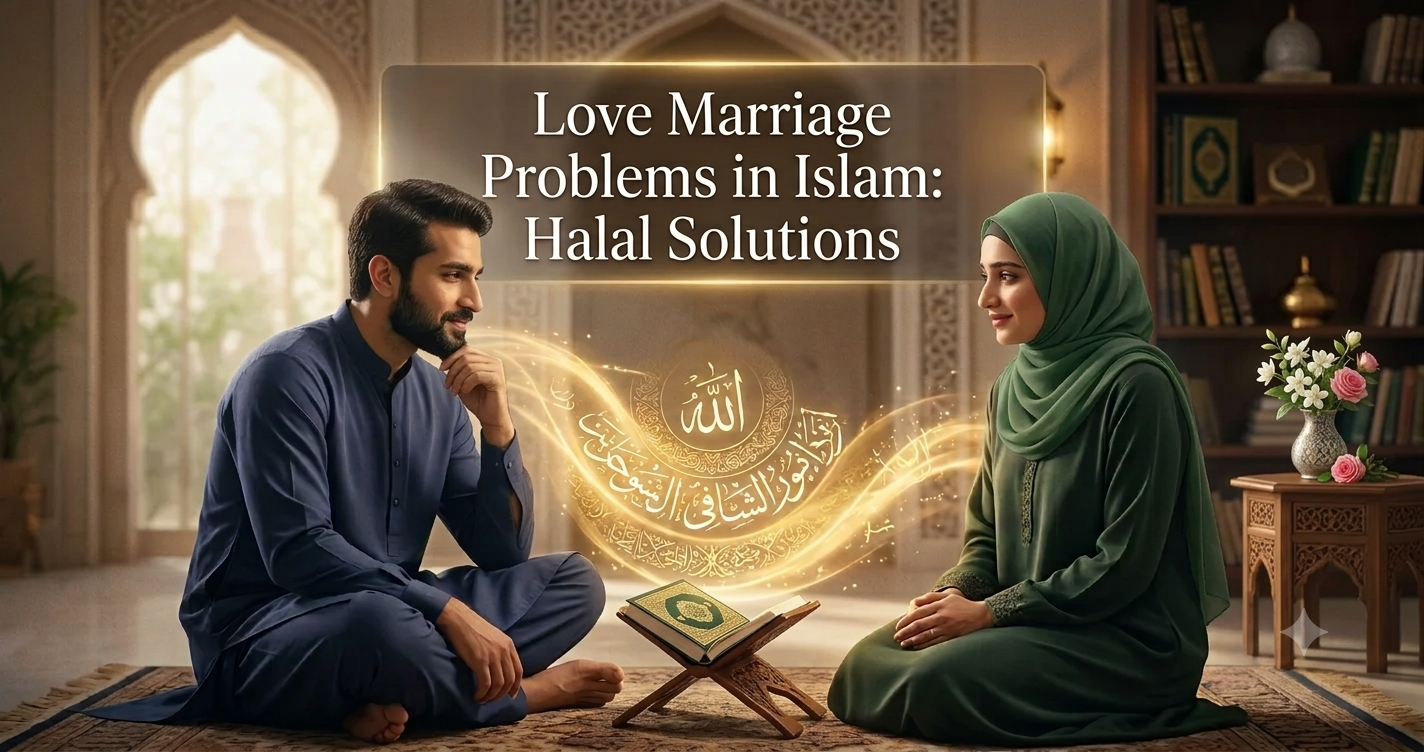
Love Marriage Problems in Islam: Halal Solutions That Actually Work
Introduction
You have found someone you truly care for, someone you believe could be a good, God-fearing spouse yet instead of support, you are met with resistance. Family disapproval, cultural pressure, fear of what relatives back home will say, or simple miscommunication between two households can turn what should be a joyful decision into months, sometimes years, of stress.
For many Muslims in the UK, love marriage sits in a difficult space. Islam does not forbid a marriage based on mutual love and respect, provided it stays within halal boundaries. Yet the cultural weight carried by many South Asian and Middle Eastern families often makes love marriage feel like a battle rather than a blessing.
The good news is that Islam itself offers a clear, dignified framework for resolving these tensions one rooted in dua, sabr (patience), honest communication, and Quranic guidance, rather than secrecy or conflict. This guide walks through the real, halal solutions that genuinely help.
Is Love Marriage Actually Permissible in Islam?
Yes. Islam does not prohibit marrying someone you have come to know and respect, as long as the relationship itself remains halal throughout meaning no khalwa (improper seclusion), no physical relationship outside marriage, and no actions that compromise either person’s deen.
What Islam does caution against is:
- Secrecy that involves lying to parents or deceiving the family
- Prioritising emotional attachment over deen and character when choosing a spouse
- Rushing into commitment without istikhara, reflection, or family involvement where possible
Love marriage becomes problematic not because of the “love” itself, but often because of how it is pursued through conflict, secrecy, or disrespect toward parents, rather than through patience and proper process.
The Real Reasons Love Marriages Face Resistance
Understanding the root cause of the resistance is the first step toward resolving it. Common reasons include:
- Cultural or ethnic differences between families
- Class or financial expectations not being met
- Fear of “what people will say” (log kya kahenge), especially within tight-knit UK Pakistani, Indian, or Bangladeshi communities
- Previous family history or disputes unrelated to the couple themselves
- Genuine, valid concerns about character, sometimes hidden behind cultural objections
Recognising which category your situation falls into helps you and your family find the right conversation to have and the right dua to make.
Step-by-Step Halal Solutions That Actually Work
Step 1: Begin With Istikhara, Not Ultimatums
Before pushing your family or your partner’s family for a decision, perform Istikhara sincerely and consistently, asking Allah to make the path easy if it is good for you, or to remove it gently if it carries harm. This shifts your intention from “winning” the argument to seeking Allah’s decision which often changes how you approach the entire situation.
Many couples navigating exactly this stage find real clarity through a guided Online Istikharah process, especially when emotions are too heightened for calm, personal reflection.
Step 2: Approach Family With Respect, Not Confrontation
Islam places enormous emphasis on birr al-walidayn (kindness to parents). Even when parents are wrong or overly influenced by culture rather than deen, responding with patience and respectful dialogue tends to open doors that confrontation closes permanently.
Practical steps include:
- Choosing a calm, private moment rather than a heated one
- Involving a respected elder or imam as a mediator, where possible
- Being honest about your intentions and character of your partner, rather than hiding the relationship further
Step 3: Use Wazifa for Softening Hearts
Certain adhkar and wazifa are traditionally used to soften hardened hearts and ease family tension, particularly around marriage decisions. This is not a shortcut to bypass communication it is a spiritual companion to it, asking Allah to remove ego, misunderstanding, and stubbornness from the process.
For couples specifically seeking to strengthen mutual love and understanding once initial resistance begins easing, exploring an Islamic Marriage Wazifa alongside consistent dua can offer real, felt support during this waiting period.
Step 4: Address Underlying Family Conflict Directly
Sometimes the resistance to a love marriage is really a symptom of older, unresolved family tension old disagreements, sibling rivalry, or in-law disputes that have nothing to do with the couple themselves. In these cases, treating the surface issue alone rarely works.
A more complete Family Disputes Solution approach can help identify and calm these deeper tensions, creating space for the actual marriage conversation to happen productively.
Step 5: Protect the Relationship From Outside Interference
Occasionally, love marriage resistance is not simply cultural it may be intensified by outside interference, jealousy, or even spiritual blockage (bandish) from someone who does not want the union to succeed. If proposals keep collapsing at the last moment for no logical reason, or family opinion shifts suddenly and inexplicably, this pattern is worth examining separately through a proper Bandish Ka Tor consultation.
Step 6: If the Relationship Has Been Strained, Seek Restoration First
Sometimes prolonged family pressure creates distance or hurt between the couple themselves, even before the wedding takes place. If trust or affection has been damaged during this process, restoring that closeness through sincere dua and, where appropriate, guided support such as Wazifa for Husband Love can help rebuild the relationship on a stronger footing before marriage.
What If the Family Still Refuses?
If, after sincere effort, dua, and respectful dialogue, a family’s objection is based purely on cultural bias rather than any legitimate deen-based concern, Islamic scholars generally agree that parental consent, while highly encouraged and important, is not always an absolute condition for a valid marriage particularly for adult men, and for women depending on the applicable fiqh school and individual circumstances. This is a nuanced matter and should always be discussed directly with a qualified, trusted local imam or scholar before any decision is made.
What matters most throughout this process is that:
- The relationship remains halal at every stage
- Decisions are made with sincerity, not rebellion or resentment
- Parents are given every reasonable opportunity to be part of the process
When to Seek Additional Spiritual Guidance
If you have tried respectful communication, consistent Istikhara, and wazifa, yet the situation remains unusually stuck, repeatedly blocked, or emotionally exhausting for both families, it may help to speak with an experienced roohani ilaj practitioner. A proper evaluation can help distinguish between:
- Ordinary cultural resistance that simply needs more time and dialogue
- Deeper family conflict requiring mediation
- Possible spiritual interference requiring targeted dua and treatment